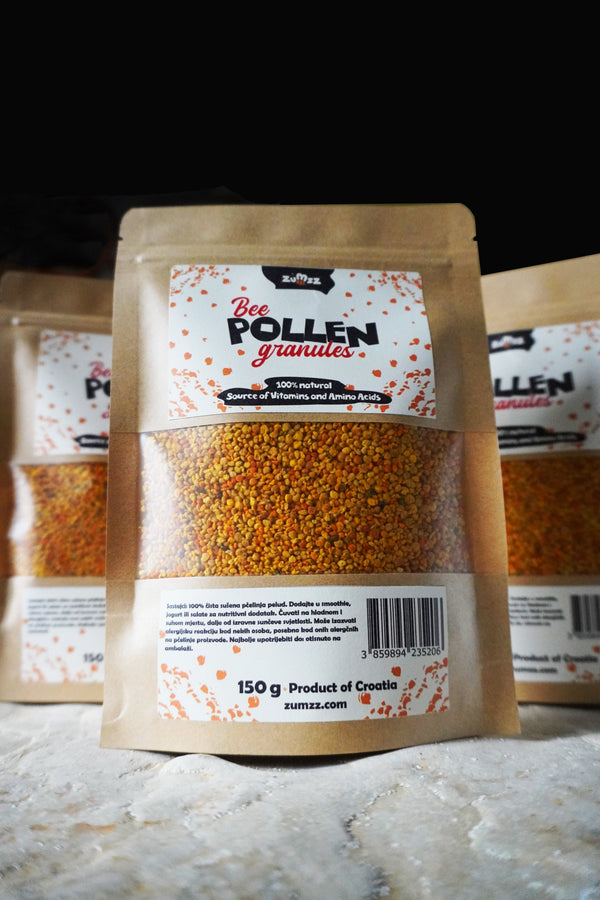
Der Frühling bringt die Natur zum Leben zurück, aber für viele Menschen auch unvermeidbare Frühlingsallergien. Eine laufende Nase, tränende Augen und ständiges Niesen werden zum Alltag. Doch was, wenn wir Ihnen sagen, dass der Verzehr von Bienenpollen – genau dem Stoff, der bei manchen Allergien auslöst – tatsächlich helfen kann, Allergiesymptome zu lindern?
Was ist Bienenpollen?
Bienenpollen ist eine Mischung aus Blütenpollen, Nektar, Enzymen und etwas Honig, die Bienen sammeln und zu kleinen Körnchen formen. Er gilt als eines der vollständigsten natürlichen Nahrungsergänzungsmittel – reich an Proteinen, Vitaminen (insbesondere B-Komplex), Mineralstoffen und Antioxidantien.
Wie hilft Pollen bei Allergien?
Das Konzept ist einfach und ähnelt der Idee der Desensibilisierung – der Körper wird schrittweise kleinen Mengen von Pollen ausgesetzt, um mit der Zeit eine Toleranz aufzubauen.
-
🐝 Natürliche Immuntherapie – der regelmäßige Verzehr von lokalem Pollen kann dem Körper helfen, Pollen als weniger „gefährlich“ wahrzunehmen, wodurch allergische Reaktionen reduziert werden.
-
🍯 Entzündungshemmende Wirkung – Pollen enthält natürliche Verbindungen, die Entzündungen im Körper reduzieren, einschließlich Entzündungen der Nasennebenhöhlen und Atemwege.
-
💪 Stärkung des Immunsystems – reich an Nährstoffen, die ein gesundes Immunsystem unterstützen und dem Körper helfen, besser auf Allergene zu reagieren.
Wie nimmt man Pollen ein?
Für die beste Wirkung sollte Pollen einige Wochen vor der Allergiesaison in kleinen Mengen eingenommen werden. Zum Beispiel:
-
Beginnen Sie mit einem halben Teelöffel pro Tag und steigern Sie langsam auf 1–2 Teelöffel.
-
Sie können ihn zu Smoothies, Joghurt, Haferflocken hinzufügen oder einfach in einem Glas Wasser auflösen.
-
Pollen wird am besten morgens auf nüchternen Magen eingenommen, um eine optimale Aufnahme zu gewährleisten.
Bienenpollen + Propolis und Honig – die perfekte Kombination
Unsere Mischung aus Pollen, Propolis und Honig kombiniert drei natürliche Verbündete gegen Allergien und zur Stärkung des Immunsystems. Honig beruhigt den Hals, Propolis wirkt antibakteriell und Pollen trägt zum Aufbau der Widerstandskraft bei.
👉 Entdecken Sie unseren reinen Bienenpollen
👉 Probieren Sie auch unsere Pollen-, Propolis- und Honig-Mischung – ein natürlicher Verbündeter gegen Allergien!
Hinweis: Wann sollte man vorsichtig sein?
Wenn Sie eine starke Pollenallergie haben, konsultieren Sie vor der Einnahme unbedingt einen Arzt. Beginnen Sie mit sehr kleinen Mengen, um die Reaktion Ihres Körpers zu testen.