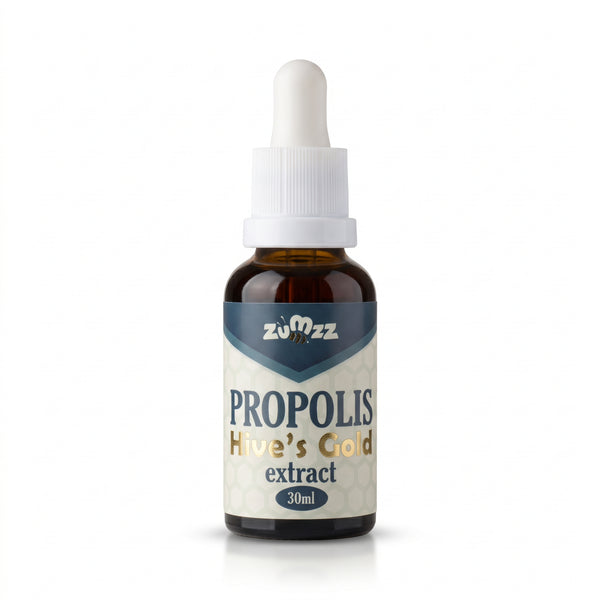
Thanks to its powerful antibacterial, anti-inflammatory, and regenerative properties, propolis has been used for decades to help relieve gum inflammation, slow the development of periodontal diseases, treat painful canker sores, and provide natural first aid for toothaches.
Propolis acts as a natural antiseptic in the mouth, helping prevent the buildup of plaque and harmful bacteria.
It is especially effective for treating gum inflammation (gingivitis) and canker sores, while also serving as a natural first aid solution for tooth pain. It is best used as a solution (drops diluted in water) for rinsing or as a spray applied directly to the affected area.
How Does Propolis Support Dental and Gum Health?
The oral cavity is one of the most microbiologically active areas in the human body. Hundreds of different microorganisms live inside it. Most of them are harmless and even beneficial. Problems occur when certain bacteria multiply excessively and begin forming dental plaque, an organized bacterial community on the surface of teeth and gums that can gradually damage surrounding tissues.
This is where propolis acts as a natural antibiotic and antiseptic within the oral cavity. A study on the effectiveness of propolis in maintaining oral health documented a significant reduction in plaque and gingivitis indexes.
According to a meta-analysis on the use of propolis for reducing dental plaque and gingivitis, regular use of propolis-based solutions significantly reduces bacterial activity in the mouth and helps relieve inflammatory processes in the gums.
Unlike commercial mouthwashes that often contain harsh chemicals and alcohol that can dry out the mucous membranes, propolis helps maintain the natural balance of oral microflora.
Propolis for Gum Inflammation (Gingivitis) and Periodontitis
Gum inflammation (gingivitis) appears as redness, swelling, and bleeding of the gums during brushing. If left untreated, gingivitis can progress into periodontitis, a serious infection that destroys the tissue and bone supporting the teeth, eventually leading to tooth loss.
Propolis works against gum inflammation in two ways:
- Antibacterial action: destroys bacteria in periodontal pockets responsible for infection.
- Anti-inflammatory and regenerative action: reduces swelling and bleeding while supporting the regeneration of damaged gum tissue.
An analysis of propolis effectiveness in periodontal disease treatment confirms statistically significant improvements in plaque and gingivitis indexes.
Additionally, a clinical study published in Nature Oral Health (Ballouk et al., 2025) reports that propolis mouthwashes show effectiveness comparable to chlorhexidine, the gold standard in dentistry.
Natural allies such as propolis can provide valuable support for oral hygiene, but they cannot replace regular dental check-ups and timely treatment.
How to Use Propolis for Periodontitis?
Add 10–15 drops of propolis into half a glass of lukewarm water and use the solution to rinse your mouth 2–3 times daily, especially after brushing your teeth. For people with very sensitive and painful gums, alcohol-free propolis drops are recommended to avoid additional burning and irritation.
Which Type of Propolis Should You Choose for Oral Hygiene?
The question is not always which form of propolis is the best, but which one is best for a specific problem. Canker sores, periodontitis, and toothache are different conditions and require different approaches. Depending on the issue, different forms of propolis may provide optimal results.
| Oral Problem | Recommended Propolis Form | How to Use |
|---|---|---|
| General hygiene and plaque | Drops (tincture) | 10–15 drops in half a glass of water, rinse and spit out. |
| Inflamed gums (gingivitis) | Spray or alcohol-free drops | Apply directly to gums or rinse with a mild solution. |
| Canker sores and mouth wounds | Pure propolis drops (tincture) | Apply 1 drop directly onto the sore using a cotton swab. |
| Toothache (first aid) | Pure propolis drops (tincture) | Soak cotton and place it on the painful tooth or gum. |
Propolis for Canker Sores and Mouth Wounds
Canker sores are small, painful wounds that appear on the inside of the lips, cheeks, or tongue. They can occur due to weakened immunity, oral infections, or certain health conditions. They can affect both children and adults.
Propolis is highly effective for canker sores because it creates a protective resin-like film over the wound, preventing further infection and providing quick pain relief.
Recent years have also highlighted the role of propolis in oral mucositis, a condition involving mouth ulcers, wounds, and inflammation of the oral tissues, which can make speaking, eating, and hydration difficult.
Several randomized clinical studies and meta-analyses have shown that propolis mouthwashes and gels may reduce the frequency and severity of oral mucositis and support faster recovery of the mucous membranes.
How to Apply Propolis:
Using a cotton swab, apply one drop of pure propolis directly onto the canker sore. You may feel brief burning at first (especially with alcohol-based tinctures), but the discomfort usually decreases quickly.
Repeat the process 2–3 times daily until the sore heals completely. If the burning is too strong or you notice bleeding or increased swelling, use alcohol-free propolis instead.
Because propolis contains many biologically active compounds that may interact with certain chemotherapy medications, its use during cancer treatment should only be considered after consulting an oncologist and medical team.
Propolis for Toothache: Natural First Aid
Toothache is one of the most unpleasant types of pain and often appears when immediate dental care is unavailable. Propolis cannot repair a damaged tooth, but it can serve as effective first aid to help relieve pain and calm inflammation due to its analgesic and anti-inflammatory effects.
How to Use It for Toothache?
Soak a small piece of cotton with a few drops of propolis and place it directly on the painful tooth or inflamed gum around it. Leave it for around 15 minutes. You can also rinse your mouth with water mixed with propolis to reduce bacteria around the affected area.
Side Effects and Precautions
Propolis may leave dark stains on tooth enamel if used in very high concentrations over a long period, especially pure alcohol-based tinctures.
These stains can usually be removed with professional dental cleaning.
People allergic to bee products should avoid using propolis, as it may cause allergic reactions.
Note: This article is for informational purposes only and does not replace professional medical or dental advice. For diagnosis and treatment of health problems, as well as regular dental check-ups, always consult your dentist.