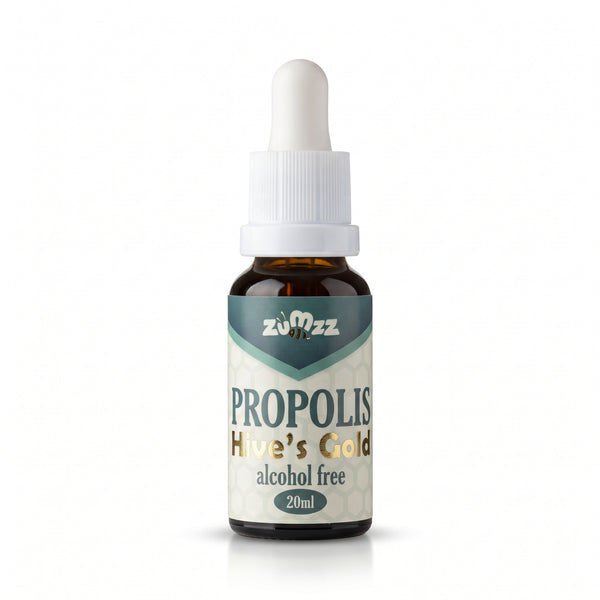
Propolis is one of the most popular natural supplements for strengthening immunity and fighting seasonal colds.
Propolis can be a safe and beneficial supplement for children's immunity, provided that it is used exclusively in an alcohol-free form, such as drops or sprays.
During pregnancy, caution is advised and consultation with a doctor is required, while alcoholic tinctures should be strictly avoided.
That is why it is important to know which type of propolis to choose, how to dose it correctly, and why native propolis is increasingly recognized as a gentler and safer option.
Which Propolis Should You Choose for Children?
For children, only alcohol-free propolis is recommended (often labeled as “baby propolis”).
Traditional propolis drops (tinctures) contain a high percentage of ethyl alcohol, which is not suitable for children's bodies and may cause strong burning sensations in the throat and mouth, as well as stomach discomfort.
In alcohol-free versions, the beneficial compounds from propolis are extracted using propylene glycol or vegetable glycerin. This type of propolis is especially recommended for children (or adults) who are sensitive to bitter tastes and prefer sweeter flavors.
How to Dose Propolis for Children?
The general rule is 1 drop of propolis per 1 kilogram of body weight per day, although it is always best to follow the manufacturer's instructions on the packaging.
The most common recommendation is 5 to 10 drops per day for preschool children. During a cold or sore throat, the dose can be slightly increased and divided into 2 to 3 daily doses.
A study published in Pharmaceuticals (Cardinale et al., 2024) confirms the effectiveness and safety of a combined propolis preparation in children with acute tonsillopharyngitis.
Additionally, a study published in Children (Kara et al., 2025) reports that propolis spray accelerates recovery and reduces the duration of symptoms in children with oral infections.
During childhood, problems with baby teeth are also common. They can easily decay, cause pain and discomfort when they are ready to fall out. Propolis can also play an important role here: besides reducing irritation and discomfort, it can support oral hygiene in cases of existing cavities, prevention of dental issues, or small wounds caused after the first teeth fall out.
Note for parents: Before the first use, perform a small allergy test. Apply one drop to the inside of the child's forearm and wait 24 hours. If there is no redness or irritation, propolis is generally considered safe.
Propolis is not recommended for children under 1 year of age without consulting a pediatrician.
Is Propolis Safe During Pregnancy?
Pregnancy is one of the most beautiful periods in life, but the body also goes through major immune adaptations to support the growing baby. Hormonal changes occur, and the body becomes more sensitive to external influences.
Because of this, many pregnant women look for natural solutions for colds, sore throats, or seasonal viruses, especially since medication options during pregnancy can be limited.
Clinical studies on the use of propolis during pregnancy are limited. However, current research does not indicate harmful effects on fetal development when used in moderate amounts.
A study on the effects of propolis on fetal development (Heliyon, Sulaeman et al., 2019) concluded that a dose of 380 mg/kg of Indonesian propolis was relatively safe during pregnancy.
Additionally, a study on improving pregnancy outcomes with propolis (BMC Complementary and Alternative Medicine, Mohammadzadeh et al., 2018) reported no major fetal malformations.
If you use propolis during pregnancy, follow these rules:
-
Avoid alcoholic tinctures completely: Alcohol, even in small amounts found in drops, is not recommended during pregnancy.
-
Choose alcohol-free drops or native propolis: Water-based solutions, propolis powder, or native (raw) propolis in capsules are considered safer options.
-
Consult your doctor: Before taking any supplements, including propolis, pregnant women should consult their gynecologist.
Contraindications for propolis use during pregnancy are still not fully researched, which is why caution is recommended.
For topical use (for example, propolis ointment for cold sores or minor wounds), propolis is generally considered safe during pregnancy.
Clinical studies on propolis use during pregnancy are still limited. Current research does not indicate harmful effects when used moderately, but available data is not yet sufficient for definitive conclusions.
Always consult your doctor before use.
Native Propolis vs. Tincture: What Is the Difference?
Propolis is most commonly available in two forms: tincture (drops) and native propolis. Understanding the difference is important when choosing the best option for your needs, especially for children and pregnant women.
| Feature | Native Propolis (Capsules/Powder) | Propolis Tincture (Drops) |
|---|---|---|
| Composition | 100% raw, unprocessed propolis | Propolis extract + solvent (alcohol) |
| Alcohol Content | 0% | High (except alcohol-free drops) |
| Nutrients | Retains vitamins, minerals, and wax | Loses some nutrients during filtration |
| Bioactive Compounds | Full spectrum of flavonoids and polyphenols | Partially preserved |
| Best For... | Long-term immunity support, children, pregnant women, digestion | Disinfection, topical use, acute throat issues |
Why Choose Native Propolis?
Native propolis is pure, raw propolis in its original form, without chemical processing, heating, or alcohol extraction.
For many parents and pregnant women, this is its greatest advantage. Bees do not create propolis as a tincture. They create it as a complete, complex substance, a natural “survival tool” for the hive. Native propolis aims to preserve this original composition.
Analysis of propolis composition confirms that native propolis retains biologically active compounds, including heat-sensitive components that can be lost during extraction. It does not irritate the stomach or throat lining, making it a suitable option for children, pregnant women, and people with sensitive digestion.
Note: This article is for informational purposes only and does not replace professional medical advice. Pregnant women and parents of young children should always consult a doctor or pediatrician before introducing new supplements.