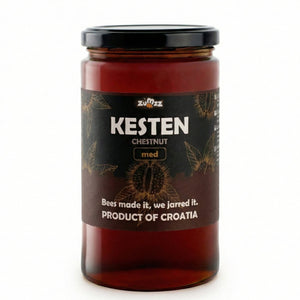
Natural honey has proven hepatoprotective properties thanks to its high antioxidant content, which protects liver cells from damage. In the case of fatty liver disease, honey must be consumed in strict moderation (a maximum of 1 teaspoon per day) due to the presence of fructose. In such cases, the best choice is darker honey varieties such as chestnut honey, due to its exceptionally high concentration of phenolic compounds, which help reduce inflammation and support detoxification.
The liver is our body's primary "laboratory," responsible for body detoxification, fat metabolism, and energy storage. In the modern age, due to sedentary lifestyles and diets rich in industrial sugars, more and more people are suffering from non-alcoholic fatty liver disease (NAFLD).
Natural bee honey, unlike refined sugar, contains a unique combination of antioxidants, enzymes, and minerals that can protect liver cells. In this article, we will explore the scientific evidence regarding the hepatoprotective effect of honey and explain how to consume it properly, especially if you already have a fatty liver.
How does honey affect the liver (hepatoprotective effect)?
Honey acts as a natural protector of the liver (hepatoprotector) thanks to its rich antioxidant profile. Liver cells are constantly exposed to oxidative stress due to the breakdown of toxins, medications, and metabolic waste, and the antioxidants in honey—flavonoids and phenolic acids—neutralize free radicals and prevent damage to liver tissue.
Scientific research confirms this protective mechanism. A study published in the journal Molecules (Erejuwa et al., 2012) describes honey in detail as a novel antioxidant with pronounced hepatoprotective effects, while research at Monash University explains honey’s ability to quench free radicals in the liver.
Consuming honey also stimulates the synthesis of glutathione—the most important intracellular antioxidant essential for detoxification processes.
Honey and fatty liver (NAFLD): is it safe to consume honey?
People with non-alcoholic fatty liver disease (NAFLD) can consume honey, but only with strict caution and moderation. The main problem with fatty liver is fructose—a sugar that is metabolized exclusively in the liver, and excessive intake of industrial fructose (such as high-fructose corn syrup in sodas) directly promotes fat formation in the liver (lipogenesis).
However, the fructose in natural honey comes in a completely different "package"—it comes combined with vitamins, minerals, and antioxidants that mitigate its negative effects.
A review in Springer (Taleuzzaman et al., 2020) suggests that flavonoids from honey actually have a beneficial effect on NAFLD because they reduce inflammation and insulin resistance.
In addition, a study in Evidence-Based Complementary and Alternative Medicine (Alfarisi et al., 2020) showed that specific honey blends ("trihoney") can maintain normal liver function and protect it from the progression of NAFLD.
Therefore, honey can be beneficial, but only if used in very small, controlled amounts as a substitute for white sugar, rather than as an addition to an existing diet.
Why is chestnut honey the best choice for liver health?
When it comes to liver protection, chestnut honey is convincingly the best choice among domestic honey varieties. Dark honey varieties naturally contain a significantly higher concentration of phenolic compounds and antioxidants compared to lighter varieties like acacia.
The phenolic compounds in chestnut honey actively participate in detoxification and the reduction of inflammatory processes in the liver.
A study in Evidence-Based Complementary and Alternative Medicine (Yıldız et al., 2013) investigated the hepatoprotective potential of chestnut bee products and confirmed their ability to protect the liver from chemically induced damage.
Due to its specific, slightly bitter taste and powerful composition, chestnut honey is ideal for people who want to provide targeted support for their liver function.
How to properly consume honey for liver detoxification?
For honey to have a therapeutic effect, the proper dosage and method of administration are key. For people with fatty liver, the absolute maximum is 1 teaspoon per day—it is recommended to take it in the morning on an empty stomach, dissolved in a glass of lukewarm water (lukewarm water stimulates digestion and bile flow, while honey provides easily accessible energy for morning detoxification processes).
Rules of consumption for liver health:
- Strict moderation: A maximum of 1–2 teaspoons per day (for people with diagnosed fatty liver, only 1 teaspoon).
- Lukewarm water: Dissolving honey in lukewarm (not hot!) water preserves precious enzymes and stimulates the work of the intestines and liver.
- Combination with lemon: Adding a few drops of freshly squeezed lemon to the honey water helps in alkalizing the body and further stimulates liver enzymes.
The importance of raw, unprocessed honey
If you buy honey in a supermarket, there is a high probability that you are buying a pasteurized product that often undergoes industrial heating and filtration processes to stay liquid. During this process, the very antioxidants and enzymes crucial for liver protection are destroyed, turning the honey into a simple, high-fructose syrup—which is the worst possible option for a fatty liver.
For any health benefit, and especially for a sensitive organ like the liver, it is essential to use only raw, unprocessed honey.
Raw honey is extracted and packaged without any heating, retaining 100% of its natural medicinal potential.
Note: This text is for informational purposes only and is not a substitute for professional medical advice. Honey helps as part of a healthy diet but does not cure liver diseases. Individuals with diagnosed non-alcoholic fatty liver disease (NAFLD) or cirrhosis should always consult with a medical specialist before introducing honey into their daily diet.