Honey crystallization is a completely natural process and one of the most reliable signs that you have real, raw honey in your hands. Although many consumers think that honey has gone bad when it changes from a liquid state into a solid or grainy texture, this is incorrect.
This process does not affect the quality, taste, nutritional value, or safety of honey for consumption.
What is honey crystallization and why does honey "sugar"?
Honey crystallization occurs due to the natural separation of glucose from water inside the honey. Chemically speaking, honey is a supersaturated solution of sugars that contains around 70% to 80% sugar and less than 20% water. Because of this imbalance, the solution is unstable, causing glucose molecules to gradually separate and form crystals.
The main reason honey crystallizes lies in the ratio of the two main natural sugars: glucose and fructose. Glucose is less soluble in water than fructose, and honey with a higher glucose content crystallizes significantly faster. According to an analysis published on PubMed Central, the glucose-to-water ratio (G/W) is a key predictor of the speed and intensity of crystallization in all types of honey.
You may often hear the myth that crystallized honey is a sign that "the bees were fed sugar" or that the honey is artificial. The truth is exactly the opposite.
Industrially processed honey is often heated at high temperatures and micro-filtered to remove pollen and prevent crystallization, extending its shelf life, but this process removes valuable enzymes, flavonoids, and antioxidants.
Experts warn that commercial honey processing, despite the visual appeal of a liquid product, significantly reduces its nutritional value. Therefore, if your honey crystallizes, it is confirmation that you are consuming an authentic, natural product.

Which types of honey crystallize the fastest?
The speed at which honey crystallizes directly depends on the type of flower nectar collected by bees, or more specifically, the ratio of glucose and fructose in that nectar. Research from Smiley Honey School shows that honey with a glucose-to-fructose ratio (G:F) above 0.8 crystallizes within weeks to several months, while honey with a ratio below 0.7 can remain liquid for years.
id="q7m2kp"|
Type of honey |
Crystallization speed |
Reason |
|
Sunflower honey |
Very fast (weeks) |
Extremely high glucose content, forming larger crystals. |
|
Rapeseed honey |
Very fast (days to weeks) |
Highest glucose percentage, creating a fine, creamy texture. |
|
Meadow (flower) honey |
Medium to fast (months) |
A mixture of different nectars usually provides enough glucose for faster crystallization. |
|
Acacia honey |
Very slow (1 to 2 years) |
High fructose and low glucose content keep it liquid for a long time. |
|
Chestnut honey |
Slow (months to years) |
Rich in fructose, with a specific mineral composition that slows crystallization. |
|
Sage honey |
Slow (around one year) |
Fructose dominance prevents rapid glucose crystal formation. |
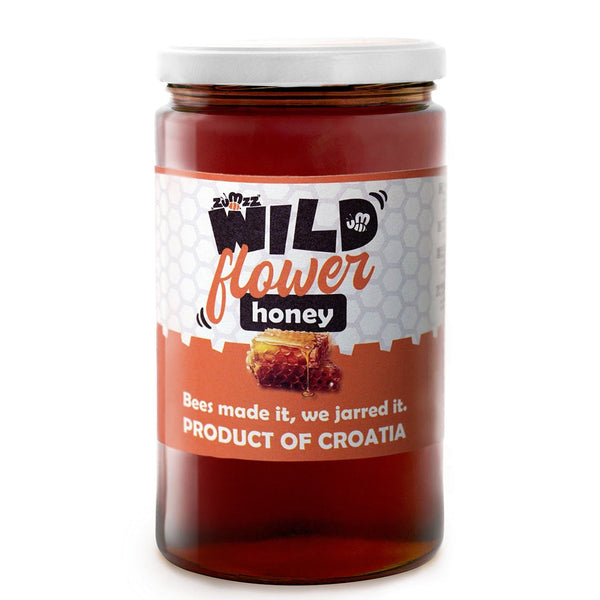
Love meadow honey? Our Zumzz Meadow Honey — raw, unfiltered, and rich in natural enzymes — is exactly the type of honey that will show its authenticity over time through crystallization. Buy now →
Besides the sugar ratio, the presence of tiny particles such as pollen, wax, or propolis in raw honey acts as a nucleation point around which glucose crystals begin to form. According to Intertek’s review, the more natural and less filtered the honey is, the sooner crystallization begins, which is actually another indicator of its authenticity.
Is crystallized honey spoiled?
No, crystallized honey is absolutely not spoiled. Honey is one of the few foods that practically cannot spoil when stored properly, thanks to its low water content, acidity (low pH), and natural antibacterial properties.
When honey becomes solid, it retains all of its vitamins, minerals, enzymes, and antioxidants while its nutritional value remains unchanged.
In fact, many culinary experts prefer crystallized honey because it does not run and is ideal for spreading on toast, adding to warm drinks, or using in marinades.
Beekeeper and author of the book Honey, Amy Newsome, explains in an interview with Epicurious that we should learn to appreciate crystallized honey and work with it as a "wonder of the natural world." Therefore, you can continue consuming crystallized honey without concern.
How to dissolve crystallized honey (decrystallization)?
The safest method is a slow warm water bath where the temperature does not exceed 40°C. The goal is to gently warm the honey so that the glucose crystals dissolve again without damaging the natural enzymes. Honey House’s guide lists this method as the gold standard for decrystallizing raw honey.
Here are three proven methods to return crystallized honey to a liquid state:
1. Warm water bath (Best method)
This is the most recommended method because it preserves the quality of the honey.
1. Pour warm water into a container. Make sure the water is not boiling; the ideal temperature is around 35°C to 40°C (comfortably warm to the touch).
2. Place the jar with crystallized honey (never plastic) into the water so that the water level reaches the level of the honey, but stays below the lid.
3. Leave the jar in the water for 15 to 20 minutes.
4. Occasionally open the jar and gently stir the honey with a clean spoon to speed up the dissolving process.
5. If the water cools down and the honey has not dissolved yet, replace the water with fresh warm water and repeat the process.
2. Radiator or warm room
If you are not in a hurry, this is an excellent, completely natural method. Find a warm place in your home, such as near a radiator (not directly on a hot radiator) or a sunny windowsill, and leave the jar there for several days. Gentle, continuous warmth will slowly break down the crystals and return the honey to a liquid state.
3. Using an oven at the lowest temperature
If you have a larger amount of honey, you can use an oven. Set it to the lowest possible temperature (no higher than 40°C), place the jars of honey inside, and check them frequently. As soon as the honey becomes liquid, remove it and allow it to cool back to room temperature.
How NOT to dissolve honey and why should you avoid the microwave?
Never use a microwave oven to decrystallize honey. A microwave creates uneven heat that can quickly exceed the safe limit of 40°C. High temperatures immediately destroy sensitive enzymes, vitamins, and antioxidants, turning honey from a beneficial food into ordinary liquid sugar.
Experts from Bee Inspired Goods warn that heating plastic containers in a microwave may also cause harmful chemicals to leach into the honey, which is another reason to avoid this method.
Does heating and temperature affect honey quality?
Yes, temperature directly affects honey quality, which is why it is important to know how to properly melt honey. Honey is a living product, rich in biologically active compounds.
When honey is heated above 40°C, the denaturation process begins, during which natural enzymes such as diastase and invertase, which contribute to honey’s antibacterial properties, begin to break down.
Experts recommend treating honey as a raw food and avoiding exposure to high temperatures in order to preserve its beneficial properties.
Overheating not only destroys nutritional value but can also change the color (making honey darker) and alter its taste, giving it a slightly caramelized or bitter note. This is exactly why the warm water bath method should always be the first choice.
How to prevent honey crystallization?
Although crystallization is unavoidable for most types of real honey, there are ways to significantly slow down this process through proper storage.
Store honey at room temperature between 20°C and 25°C. Interestingly, crystallization happens fastest at temperatures between 10°C and 15°C, which means storing honey in the refrigerator is one of the biggest mistakes because low temperatures dramatically speed up glucose crystal formation.
Use airtight glass containers because honey easily absorbs moisture from the air (it is hygroscopic), and excess moisture can lead to fermentation. If you want honey that stays liquid for a long time, choose acacia, chestnut, or sage honey, which are naturally richer in fructose.
Conclusion
The next time you see crystals in your jar, do not throw it away. Crystallization is simply proof that you have real, raw honey, one that has not been exposed to high temperatures or aggressive filtration. Understanding why honey crystallizes and which types do so faster helps remove the fear that honey has gone bad. If you prefer liquid honey, you now know how to safely and effectively dissolve it using a gentle water bath. Nature has simply done its work.
Try our raw honey: Our Zumzz Forest Honey — rich in minerals and natural antioxidants — preserves everything nature has to offer, without compromise. Buy now →
Note: This text is for informational purposes only and is not a substitute for professional medical advice. For diagnosis and treatment of health problems, consult your doctor.